TITO GOBBI, BARITONE, OCTOBER 24, 1913
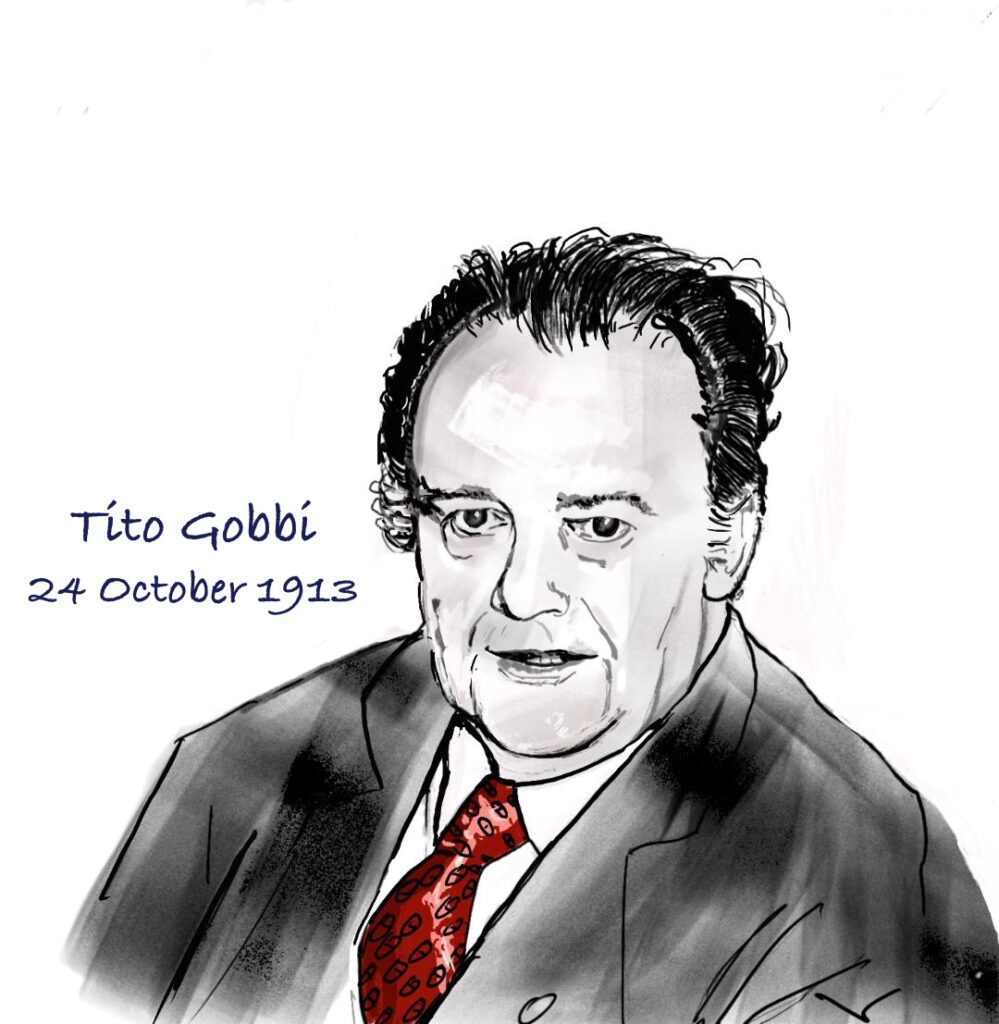
‘The first time anyone noticed my voice was when I was at elementary school, which was the first stage of our education. Our singing teacher was preparing us for an end-of-term performance to take place before the general inspector and our parents. We were to do a sort of chorus of national songs, and at one of our rehearsals our teacher, Maestro Bevilacqua, started going around the class muttering to himself. Finally he stopped in front of me and exclaimed: ‘You’re the culprit! You’re shouting like a mad dog – its terrible! You keep silent. But as we don’t want the inspector to know you are not singing, simply open and shut your mouth and pretend to sing.’’ Tito Gobbi
Such was the vocal debut of one of the greatest operatic baritones of the twentieth century, and one of the most admired interpreters of the classic Italian repertoire, who dominated the stage with his presence, acting and vocal intelligence.
Tito Gobbi was born on the 24th October 1913 in Bassano del Grappa , a true son of the Veneto, to a successful mercantile family of the region that traced its presence there for centuries. The potential of his voice however, was noticed by a family friend, Baron Zanchetta hearing him sing, looked out the window and asked who was singing. The Baron summoned young Tito and told him he was a baritone and should seriously consider singing as a profession. At this stage, young Tito had never given thought to it, having considered himself more a painter, but ‘the Barone had planted the first germ of an idea in my mind, and he even gave me a few basic singing lessons.’ Tito accompanied his father to Rome for an opinion from the great Sicilian tenor, Giulio Crimi, who heard something in his voice, but recommended three months to see if there really was a vocal talent to work with. In this period of his life Tito supported himself by painting Roman subjects for tourists, which gives a small indication of his artistic talent. He also met his wife, who was an accompanist for Crimi and eventually Crimi took Tito into the household, believing he had the gifts and temperament of a great singer.
There were a number of ‘false starts’ to his professional career. Most depressingly in 1934 as the Count in La sonnambula in Gubbio which his family and Crimi attended. When Tito tentatively asked about the performance, Crimi’s response was, ‘My address,’ he replied grimly, is so and so. If you think you had better go on studying, come and see me tomorrow. Otherwise – good-bye.’ A short spell of study followed at La Scala where according to an amusing anecdote in his autobiography, much to his embarrassment, he fluffed his one line appearance as a Herald in Simone Boccanegra by coming in thirty seconds too early.
Better fortune was to follow when he stepped in at the Teatro Adriano in Rome in 1937 to sing the part of Germont. It was this appearance that brought him to the attention of Tullio Serafin who auditioned him and brought him into the Teatro Reale in Rome. Serafin was a great inspiration and taskmaster. Gobbi wrote, ‘He was utterly generous when generosity was called for, but equally he was ruthless if the situation demanded it.’ According to Gobbi, ‘The regime of work was severe. During my first six years at the Teatro Reale I learned sixty-six roles, not actually singing all of them on the stage of course but learning them in depth and sometimes ‘covering’ for more experienced singers.’ From 1938 he began to sing regularly at the Teatro Reale. His first great success was in a piece one does not normally associate with a great interpreter of Verdi and Puccini; in 1942 he played Wozzeck in the Italian premiere of Berg’s eponymous opera.
Following the war he made his first international appearances in Stockholm (1947) and the USA (1948), and his international reputation grew with the roles of Boccanegra, Posa, Iago, Rigoletto and Falstaff. He also most memorably was the Scarpia to Callas’s interpretation of Tosca and we are thankful to the black and white film made of the second act of Tosca to have a glimpse of how they both captivated an audience with their interpretative ability. Ever a thoughtful performer, his stage presence, charisma and acting ability was phenomenal. Those that saw and heard him during the 40s, 50s and 60s gave glowing reports: ’intelligence, musicianship and acting ability, allied to a fine though not large voice, made Gobbi one of the dominant singing actors of his generation.’ J.B. Steane wrote, ’Gobbi’s voice was one of the most beautiful I ever heard. If the reader rightly detects a note of defiance in that, it must be because both of us know that beauty of sound was not among the qualities most conspicuously attributed to him.…he paid the usual price of the actor-singer…people were so busy looking at him that they almost forgot to think about what they heard.’ And perhaps what is the greatest compliment of all, ‘…if the genie of the magic lamp or the operator of the time-machine were to offer a voyage back to hear one voice from the past ‘live’ experience, I would ask for Gobbi.’
Gobbi made numerous recordings and also appeared in twenty-six films. In 1965 he was invited to produce a Simone Boccanegra at Covent Garden and Chicago which launched a second career as an opera producer. His views on opera production align with his dramatic sensibility: ‘my first feeling is one of responsibility towards the composer and the librettist. I do not aim at headlines proclaiming, ‘“Tito Gobbi’s controversial production”. I have no ambition to read in any newspaper, “A piquant experience awaited us at the Opera last night, for when the curtain rose on Tito Gobbi’s production of Otello we found ourselves in the world of Watteau” (or Breughel, or God knows who). My simple intention is that the audience should find themselves on such an occasion in the world of Verdi and Shakespeare.’
A man of many gifts, he was generous and fair with his colleagues. When he acted as a manager and arranged a concert with Beniamino Gigli, he refused to take any commission. Gigli was so impressed with Gobbi’s integrity, he returned the favour by singing gratis at a benefit concert in Bassano. He gave singing master classes, was a fine painter, and authored two essential books; his autobiography and ‘Tito Gobbi on his World of Opera’ in which he outlined his interpretation of roles and thoughts on singers and singing.
He passed away in 1981.
EPISODE 15 CELEBRATING LUCIANO PAVAROTTI’S 90TH BIRTHDAY
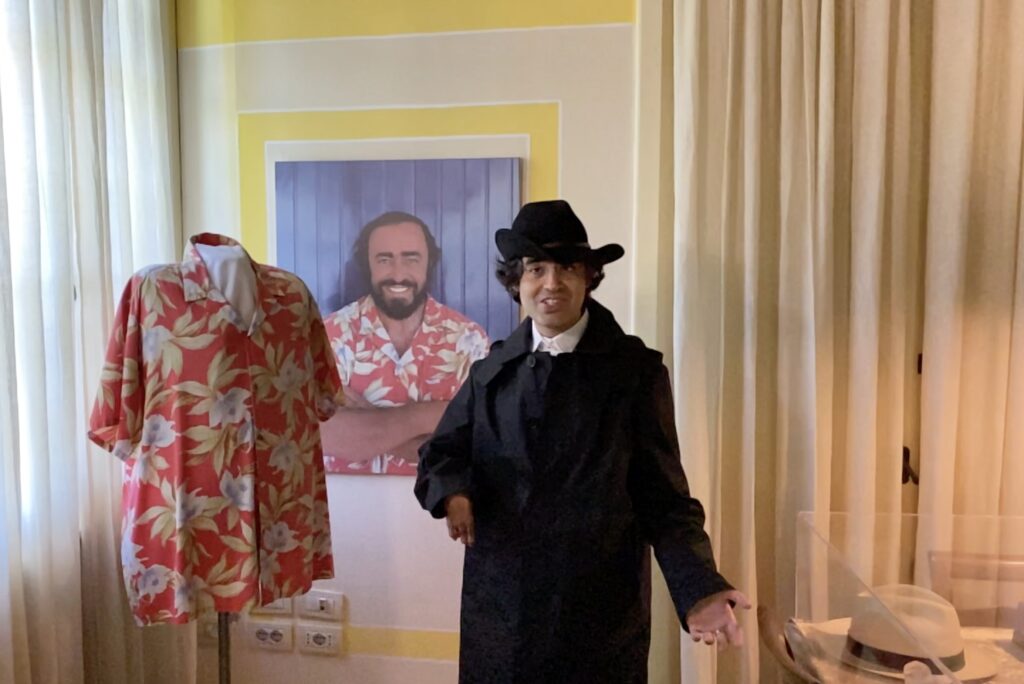
Today, the October 12, 2025, marks the 90th birthday of my childhood tenor vocal hero, Luciano Pavarotti. Join me, Gyaan Lyon aka The Voice Detective on this special episode of The Voice Detective Show as I go on the trail of the legendary Maestro’s life, in his hometown of Moderna, Italy.
You can also read my tribute article to Luciano Pavarotti in the Legendary Singers Anthology
GYAAN LYON LAUNCHES HIS ARTIST WEBSITE ON LUCIANO PAVAROTTI’S 90TH BIRTHDAY
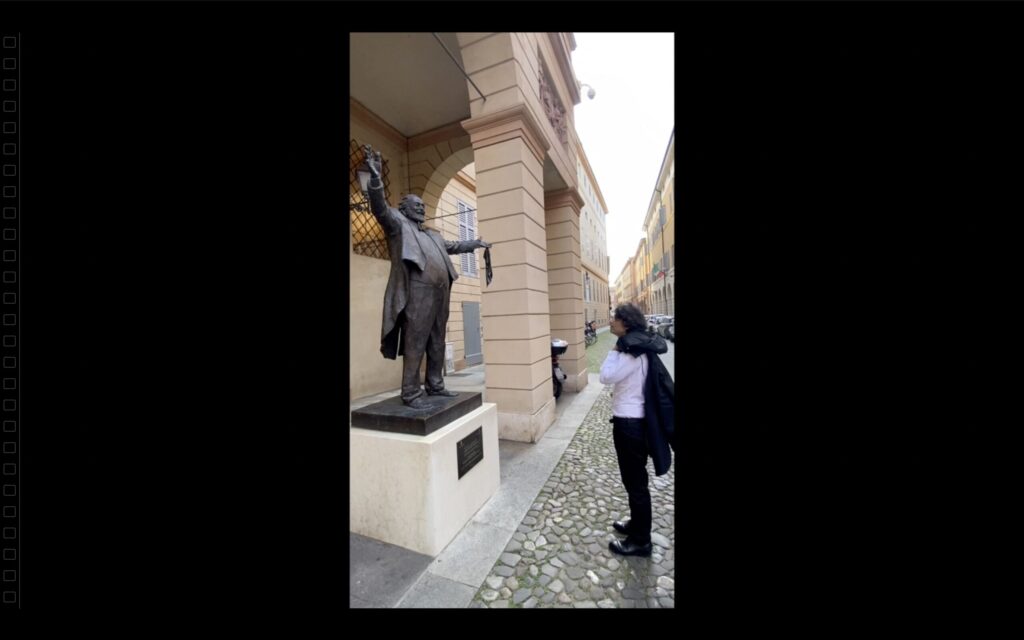
Today, October 12, 2025, I am launching my personal website as a tenor, performing artist, musician, songwriter and artist on the 90th birthday of my childhood tenor vocal hero Maestro Luciano Pavarotti.
MEHR LESEN
LUCIANO PAVAROTTI, TENOR, OCTOBER 12, 1935
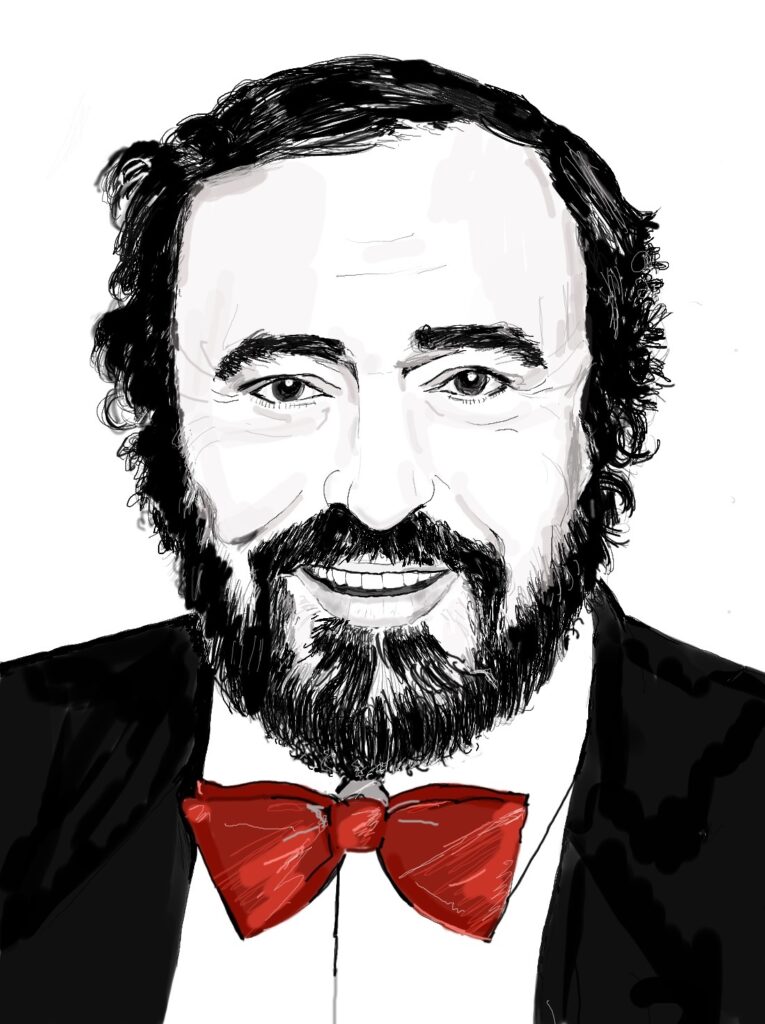
‘I want to reach as many people as possible with the message of music, of marvellous opera.’ Luciano Pavarotti
‘When it comes to singing, Luciano Pavarotti had as good an explanation for being “special” as any I ever heard. He said that his vocal cords were “kissed by God.”’ Marilyn Horne
These two quotes epitomise Luciano Pavarotti the performer. The first describes, what Luciano Pavarotti’s mission statement was and remains as the Luciano Pavarotti Foundation’s own mission; and the second, the sheer wonder of a singing colleague for the man’s vocal gifts. What they do not reveal is the generosity of the human being, his tireless support of charities, worthy causes and young singers.
2025 marks the ninetieth birthday of this great human being. His legacy lives on in the Luciano Pavarotti Foundation, which is based in his home just outside of Modena. The Foundation has the mission to promote young talented singers. This continues the generosity of the Maestro himself who ‘gave free singing lessons to many students he considered promising. He loved teaching, he used to say that sharing his experience and passion with young people was his way of thanking for the great gift he received, namely his voice.’ Today, the Foundation carries on Maestro Pavarotti’s activity following the same path he has traced, offering opportunities and visibility to the young up-and-comers of opera, also trying to make the course of study and training accessible to all.
Cognisant of the great gift he had received in his voice, with the immense professional success and recognition achieved through his art, and these had created a public stature like no other classical singer, he spread his charitable work further and wider through the Pavarotti and Friends series of concerts beginning in 1992 until 2003. Proceeds from the events were donated to humanitarian causes including the international aid agency War Child and the United Nations High Commissioner for Refugees. He also performed for immediate emergencies, such as benefit concerts to raise money for victims of tragedies such as an earthquake in December 1988 that killed 25,000 people in northern Armenia. All in all, Luciano was larger than life as a personality and yet a simple man concerned with the well-being of all people.
And what of bringing opera to the people? The English vocal connoisseur J.B Steane perhaps summed up Pavarotti’s achievement most poignantly, for the “(people who would never go near an opera house if they could help it), Pavarotti was the embodiment of the Italian tenor. ‘Pressed they might say, ‘Yes, you have to admit it, it did send a bit of a shiver through you when he sang that “Nessun dorma” thing at the World Cup.’ They might even, if pressed further, acknowledge that quite probably no other sound on earth could have been there and then, at that moment, so right and so thrilling. They like the look of him too: the generous size, the comfortable shape, the beard, the teeth, the feeling that there may be ‘something in it’, a feeling they have probably never entertained before.” A perfect testimony to the man’s appeal and effect.
Finally, how did Pavarotti himself feel when performing? The most moving description is given by the great American bass, Jerome Hines. Hines was singing with Pavarotti at his Metropolitan Opera debut in 1968in Puccini’s La bohème. Pavarotti had been suffering with a throat infection but knowing it was “now or never” decided he had to sing. Hines words then: ‘Our tenor’s voice held up very well to the end of the opera and he was very simpatico on the stage, but he was not happy about his performance. When the final curtain fell and it was time for Luciano’s solo bow, he took a deep breath, mustering his courage to face that ultimate critic – the public. As he stepped in front of the curtain, he was greeted with a roar from the audience, and deservedly so. At first, he did not bow, but stood there looking dazedly at the people while slowly the overwhelming accumulation of nerves and tension manifested itself in the tears which began running down his cheeks. He remained immobile amid the storm of applause for at least half a minute – just crying. Then, after one quick, humble bow, he hurried into the wings to find us all waiting with tears in our eyes too.’ The final part of the text is italicised for emphasis. Here, truly was a singer who moved others with his art, and had himself a great heart.
FERNANDO DE LUCIA, TENOR, OCTOBER 11, 1860
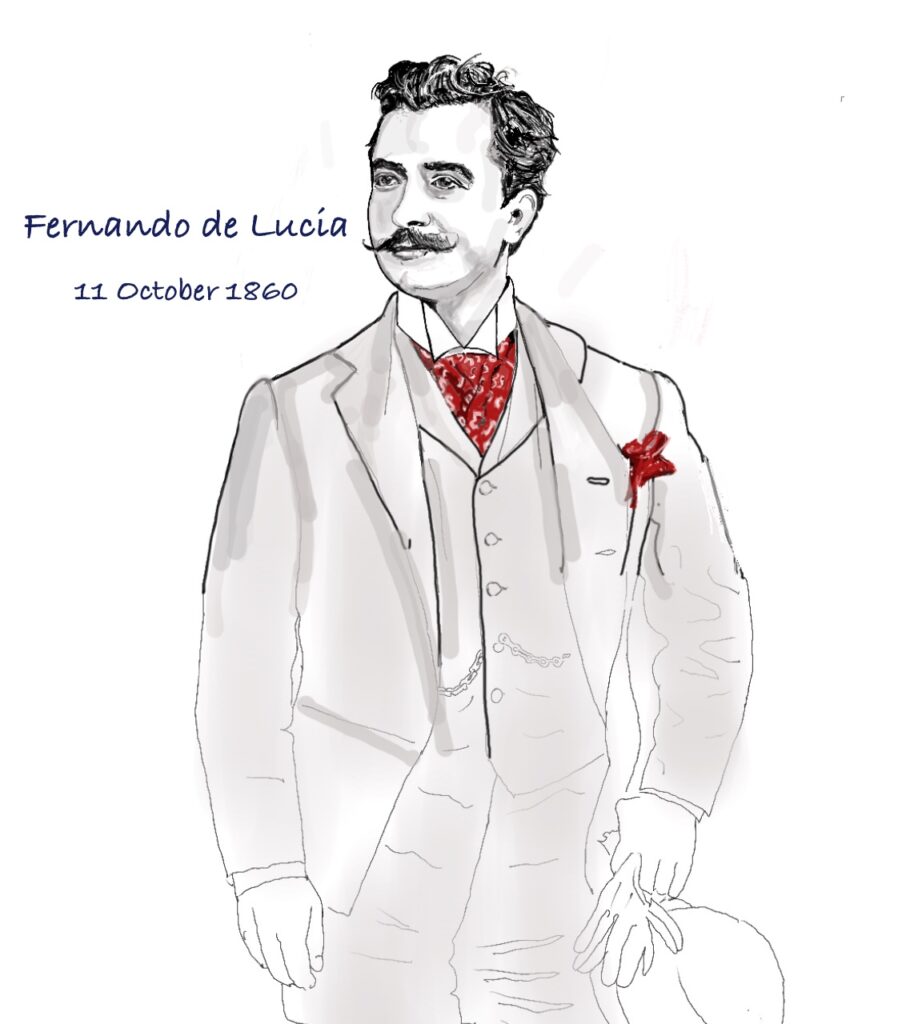
‘His career was triumphal, but brief. Too often he destroyed his heart [and] martyred his body in living the characters whom he felt as though [they were] beings woven with his own nerves. Few artists loved their own region [and] the theatre of the native city as did this highly sensitive embellisher of melody.’ Saverio Procida writing upon the singer’s death in 1925.
Born on the 11 October 1860 in that city that seems to be a veritable nursery of vocal marvels, Naples, Fernando de Lucia was the last great tenor of a long-lost era where the singing artist was expected to embellish the composers’ scores. Indeed, he stands right on the cusp between two eras and his career reflects this dichotomy.
He began as a tenore di grazia undertaking the bel canto roles of the early nineteenth century in which his vocal flexibility and inventiveness were supreme, and finished as a masterful creator and interpreter of verismo roles in which his performances have been described as ‘unforgettable’. ‘He is always the God of tenors. He drew miraculous effects from his part and enchanted listeners with his celestial voice.’
Going back further, we find there was music in his immediate family. His father, Giuseppe, was ‘credited with proficiency in the clarinet, the guitar, and the double bass.’ Initially he trained as a double bass player, at the Royal Conservatory in Naples, San Pietro a Maiella; where his elder brother Federico had trained as a violinist and was already in the Orchestra at the Teatro San Carlo. Fernando was described later as ‘first among tenors, last among double-bass players’. The regime at the conservatory needs to be mentioned; as it likely played a huge role in the Neapolitan ‘factory’ of great musicians and singers; ‘In addition to music, students at San Pietro a Maiella received a sound general education: they learned arithmetic, calligraphy, geography, national history, and the Italian language, with opportunities to study Latin, declamation, mythology, Italian poetry and literature. The working day, …, was still a long one. From 6.30 am until the students retired at 10 pm, only meals, the two half-hour periods of recreation, and the daily walk relieved the succession of lessons and religious activities, both in college and in city churches, and the continual traffic between practice rooms, college theatres, and library.’ The result was a thoughtful, well-rounded performer, who would give due consideration to interpreting the role to its fullest.
His career began modestly enough with salon and house concerts for the well-to-do Neapolitans. His first performance was on September 23rd 1883 at the age of 23. An observer wrote: ‘De Lucia (tenor) has a beautiful voice. He sings with sentiment [and] has all the qualities [needed] to become a distinguished artist,…’ The following year he made his debut at the San Carlo in Faust. At this stage he was considered primarily as a singer of Bellini and Rossini. His capacity for work and developing the power of his voice during operatic appearances in Buenos Aires and Montevideo resulted in a stronger, deeper and more dramatic sound. The critic Uda wrote concerning his I pescatore di perle, upon his return to Naples: ’In the glorious uproar, everyone must have thought of the tenorino whose dèbut we heard and encouraged … in a Faust of indulgence. To me … the transformation … seemed truly miraculous. The voice has been extended and strengthened, has acquired timbre and colour and, while the exquisite art of the singer remains, the cold virtuosity of the concert has already become sentiment and almost, passion. One could not believe one’s own ears, hearing those warm, baritonal tones contrasting with the ringing top notes and the tender sighs of the middle range.’
By the 1890s he became associated with heavy dramatic tenor roles such ad Don Josè, and he wrote in his score of Carmen, which he first sang in Florence: ’Here [is] my great career. Fernando De Lucia’ He was courted by the two intense rival music publishers of Milan, Ricordi and Sonzogno, as his vocal power, acting and stage presence was a beacon of commercial success. Such was his fame by then, that despite the fervent desire of Puccini to have De Lucia perform the role of Rodolfo in the world première of La bohème, Ricordi simply could not afford to meet the high fees demanded by the artist. But, ‘De Lucia later created Rodolfo in several major theatres, including La Scala and the San Carlo, where his fees may have been more moderate than for a world première. It seems both he and Ricordi eventually realised the mutual benefits of compromise.’
Despite the wish of the composers to have the services of so fine a singer and actor, the composers and publishers, occasionally expressed frustration too, with the liberties he would take with the new scores. Perhaps the most notorious incident took place in 1898, with an equally fiery composer conducting his own work. Pietro Mascagni was slapped by De Lucia during a rehearsal for Iris. The performance still went ahead two days later, and the two continued their professional association in the years that followed. It was in the nature of their flamboyant temperaments. It is also well-known that many of his roles were transposed. Unkind critics in Naples made derogatory comments about this, but it cannot take away from the fact that he was a consummate artist and interpreter, blessed with a sweetness and a baritonal quality. His greatest roles were perhaps Canio, Don Josè, and Almaviva, through which he set a standard that has been used as a yardstick ever since.
When Enrico Caruso died in 1921, it was De Lucia who came out of retirement to sing. He had not sung consistently on the stage since 1909. He sang a memorable Pietà Signore on this occasion.
When he died on February 21st 1925, he murmured some lines from Act IV of La Bohème relating to the death of Mimì.
By all accounts, Fernando De Lucia was a superb actor, a vocal wizard, and a generous personality. But a legacy of 400 recordings survives. George Thill, his most famous pupil wrote: ‘What I can tell you is that it is impossible to appraise the singing, as it was, of De Lucia. The records give no idea of his voice, nor of his vocal art. One had to have heard him!’ This combined with the sure attestation of his contemporaries – singers and critics – about his remarkable acting (one Carmen, ‘even backed off the stage and only the camaraderie of the curtain calls proved to the audience that the quarrel was not a real one. He so lived the part that one soprano is even said to have reminded him, before the opera, that he was only acting, and to be careful not to hurt her.’) only makes the loss even more poignant. And finally, we know that in the words of Desmond Shawe-Taylor he was ‘the last singer of the rococo age’ , the last link with a tradition of bel canto singing that stretched back centuries. And for his recordings which give a glorious afterglow of this lost art, we must be thankful.
FRITZ WUNDERLICH, TENOR, SEPTEMBER 26, 1930
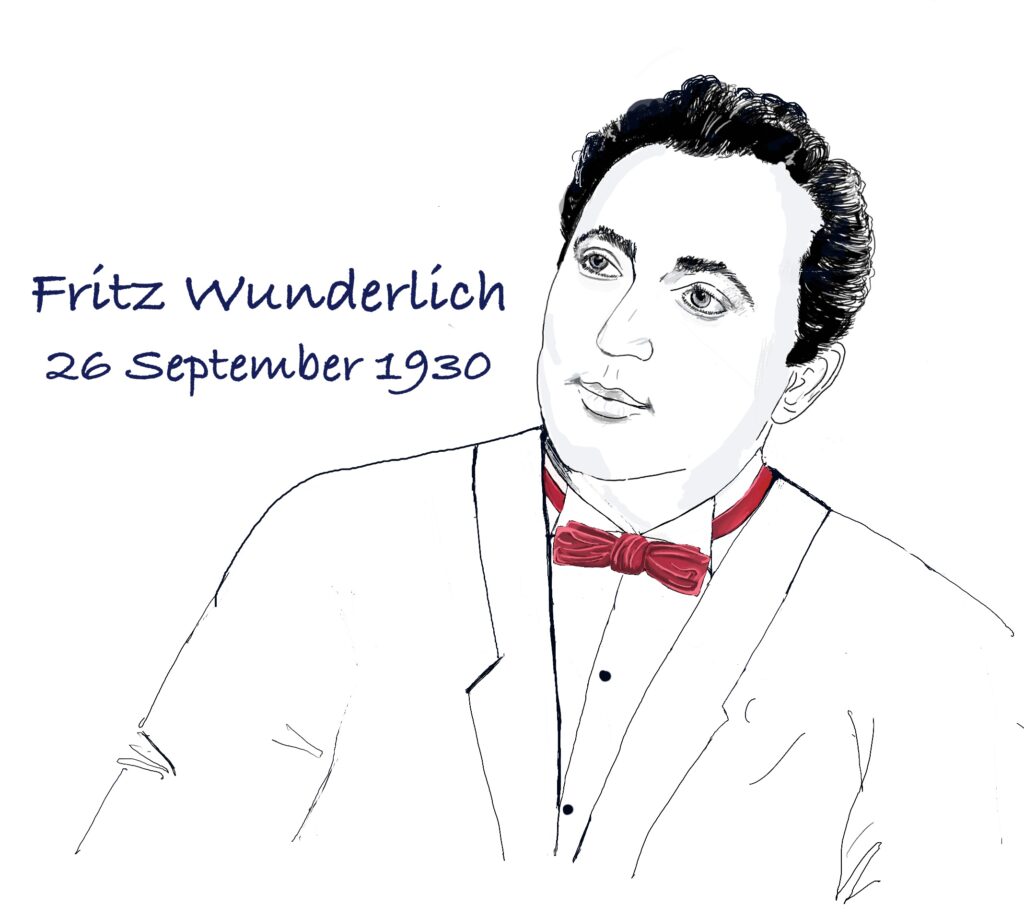
On 26th September 1930, Friedrich ‘Fritz’ Karl Otto Wunderlich was born in Kusel Germany. It was just short of his thirty sixth birthday when tragically, he was found dead after falling down a stone staircase whilst staying at a friend’s castle on a hunting trip. The world had lost one of its brightest stars in the tenor repertoire and now we must rely on the recordings of his vocal brilliance, which were thankfully many, in his brief ten year career to wonder at the talent of this great Opera and Concert artist. His untimely demise sent shock waves throughout the music world and is still difficult to comprehend to this day.
Both Fritz’s parents were musical. They ran an inn which needed major repairs to be able to keep the building from being condemned. On the day of his birth his father posted a sign on the pub ‘Fritzchen (Little Fritz) has arrived today, Pub Closed.’ Eventually the family had to move out and soon after this move, he lost his father. It was then left to his mother to make ends meet. Both he and his sister helped out. Fritz learned to play the accordion, piano and the French horn which he mastered particularly well and his remarkable breath control that became one of the hallmarks of his singing has been attributed to his prowess with the latter instrument.
Although his mother had plans for Fritz to be a public servant, he had his heart set on a career in music and was always willing to take on minor parts in the amateur choir that the conductor Emmerich Smola formed. Smola recognised his ‘glorious voice’ and it was arranged for him to study french horn and voice at Freiburg Conservatory. To assist with his tuition he received reduced tuition costs and he also played in a band to support himself whilst studying with his teacher and mentor Maria von Winterweldt.
After being noticed singing Tamino in Die Zauberflöte in a student production he accepted a contract to sing at Stuttgart Opera debuting as Ulrich Eislinger in Die Meistersinger von Nürenberg.
His international breakthrough came when Karl Böhm engaged him to sing at the Salzburger Festspiele in Richard Stauß’s Die Schweigsame Frau. So successful was his performance that Herbert von Karajan came to his dressing room after the performance and offered him a contract to sing at the Vienna State Opera which he had to turn down due to him signing with Munich Opera the week before.
He was and still is the quintessential Mozartian tenor, a voice that masters the necessities and rigours of the German language, expression and style with the exuberance, clarity and ease of the Italianate bel canto.
He was equally at home with Lied and Oratorio as indeed his recordings masterfully exhibit.
His accompanist, friend and collaborator on many of his recordings and performances Hubert Gieşen gives us an insight into Wunderlich’s character in his book, Am Flügel ( At the Piano)
’In the years of close co-operation with Fritz Wunderlich, I was sometimes overcome with a kind of fear: in spite of his carefreeness, in spite of his joy, confidence and coolness; he ‘burned the candle at both ends’. He drew on unlimited resources; he did everything with an enormous energy and intensity, as if he knew that he had only a limited period of time left. He bought cameras and became a colour photographer who developed his photographs in his own lab that he had specially furnished. That took him a lot of time and also cost him a lot of money. He had the village blacksmith forge a spit that he used for roasting meat on an open fire. He gave charming parties, often lasting half the night, where he drank and smoked quite freely, as if he was not a singer whose precious voice was a great asset. Sometimes one could virtually feel the stress he was living in.’
Then to demonstrate his friend’s vocal virtuosity and musical understanding Giesen wrote,
‘He had such a great comprehension of a song like “Die böse Farbe” (from Schubert’s “Müllerin” cycle) that he was able to afford letting the song be effective just on its own. The listener will notice that he sang it nearly unadorned, but in such a clarity that not a single note could be lost. Nothing was elegantly passed over; he did not put in any false emotionalism or sentiment, and thus he made the greater – one could even say the noblest – impression. The audience received first-hand what was Schubert’s will when he composed the song. They were not confronted with the singer’s emotions, his coquetry, his love of bel canto, but solely with the song itself. There were years of work underlying, years of a growing knowledge of precision, one could even say: work in the service of Lieder singing. Wunderlich had high notes that turned out well effortlessly, but he sang them without showing off, just as he sang all other notes that belonged to the song. This seemed to be severe and objective, but made a strange impression on the audience. Many years after his death, a lady told me: “I have heard ‘Die böse Farbe’ sung by many singers (and she named some really great ones), but it was only Fritz Wunderlich who made me weep, because I did not hear the singer anymore, I heard only the song. It was as if I had understood for the first time what it expressed…”
He was due to make his Metropolitan Opera debut as Don Octavio in Mozart’s Don Giovanni in New York before that fateful night and fall that cost him his life and silenced a voice and talent from the world rather like Mozart also dying before he reached his thirty sixth year.
EPISODE 14 MEETING NIKO: MUSICIAN, ACTOR, FILM DIRECTOR AND ARTIST
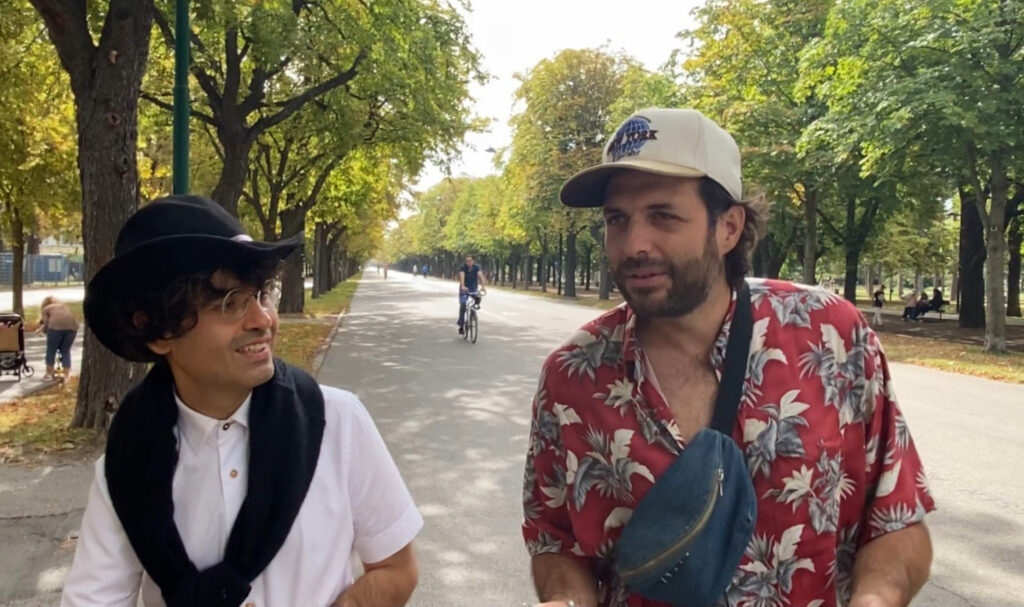
Niko aka Nikolai Selikovsky is a multi-talented performing artist born in Vienna, Austria, and currently living and working in Rome.
He is the frontman of the Hip-hop Soul Band N.I.K.O., who are releasing their new LP ‘Hello & Ciao’ at their upcoming album release concert this Friday 26th September at the B72 in Vienna, Austria.
Since the age of 19, he has been professionally active in both drama and music productions. His two streams of career encompass not only acting, but also film directing; and as a musician, he has worked with a variety of styles as a frontman on the one hand, and as a producer on the other.
His first major film, where he was producer, writer and leading actor was in the Austrian film Sturmfrei (Storm Free) in 2009. Although he has appeared in over 15 films since 1997, he achieved national recognition in his native Austria with the role of Thomas in Die Migrantigen (The Migrants) in 2017. He has honed his acting skills with the New York based acting coach Susan Batson. In 2020, he was nominated for best actor in the short film Anna at the Pigneto Film Festival and most recently in 2024, he has appeared in the Netflix hit of The Decameron.
His musical career has been marked by a willingness to find the most fitting expression of musical and poetic ideas through the most suitable genre. This eclectic approach has meant he has been at times a solo rap artist from 2007 and from 2014 working with an ensemble; the hip-hop and soul band N.I.K.O.
It is no coincidence that the 2009 film Sturmfrei included music composed by Selikovsky demonstrating the versatility and synergy of his artistic passions. His first solo album in 2010 was ‘Dichter der Großstadt’ (‘Poet of the Big City’). This was followed by ‘Zwischen Asphalt und Milchstraße’ (‘Between Asphalt and Milky Way’) which introduced the band N.I.K.O to a wider audience. In 2018, the band N.I.K.O released the album ‘Unter Strom’ (‘Under Power’). And their latest release fourth studio album ‘Hallo & Ciao’ includes the singles ‘Ballaci Su’ and ‘Lady Godard’.
The current band members are:
Nikolai Selikovsky – Vocals, electric guitar, keyboard
Leslie April – Vocals, Keyboard
Lukas Fellner – Drums
Eva Brandner – Keyboard
Sara Hoffer – Saxophone
Bernhard Fellner – Trumpet
Federico Torri – Bass
Markus Pagitsch – Saxophone
N.I.K.O. has the distinction of being the first band from Austria in 2015 to finance a tour through crowdfunding playing in Germany, Switzerland and Austria. This was followed by articles in ZIB, News, Salzburg24 up to Germany in Die Zeit, and many other media. In the same year the band performed in various locations such as the Mole West in Burgenland, Haus des Meeres in Vienna and in the Gschupften Ferdl.
In line with the stated eclecticism, N.I.K.O. is a collective of musicians from different musical genres, which varies in number during their performances. Sometimes four and sometimes up to eight musicians perform live.
For more information about the band, visit:
ww.niko-official.com
GYAAN LYON CONCERT IN SORRENTO AT VILLA CRAWFORD

For one night only, Gyaan Lyon will be performing in Sorrento on the Bay of Naples at the stunning Villa Crawford.
Performance on Wednesday 17th September 2025 at 5:30PM
See you there, Ciao For Now!
NICOLAI GHIAUROV, BASS, SEPTEMBER 13, 1929
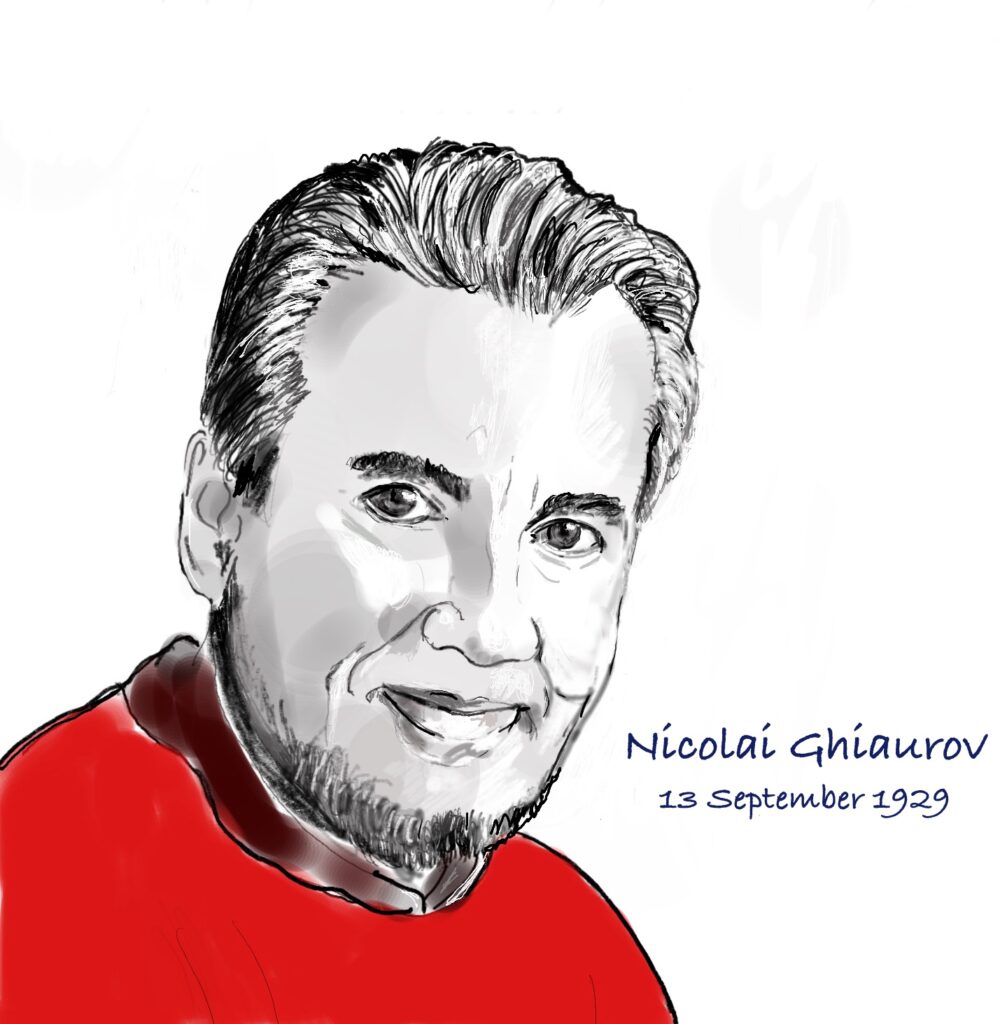
‘He possessed a voice of unusually rich and varied colour allied to an excellent vocal technique and remarkable musicality. A vigorous and painstaking actor, as an interpreter he tended to express the strong and violent emotions rather than the finer and more intimate shades of meaning.’
The great bass-baritone Nicolai Ghiaurov was born this day in 1929 in Velingrad. He followed in a long and illustrious line of bass-baritones from his native Bulgaria. Indeed, Bulgaria seems to possess some quality that produces great bass voices! And one of the very greatest was Ghiaurov.
As a child he sang frequently at family gatherings and initially learned piano, violin and clarinet. He had thought to become an actor but while undertaking his military service, in what almost seems to be a time-honoured tradition, an officer heard him sing in the choir and recommended him for a singing career! Initially studying with Christo Brambarov at Bulgarian State Conservatory he then moved on to a Leningrad and Moscow. This period of study from 1950 to 1955 was with the assistance of a state scholarship . His career was launched with first place at the Concours International de Chant de Paris in 1955. His professional debut also came in 1955 in Sofia in the role of Don Basilio in Rossini’s Il barbiere di Siviglia.
His Italian debut came in 1958 in the Teatro Communale in Bologna in Faust. By the next year he was at La scala in the roles of Boris Godunov and Phillip II – perhaps the two defining roles of his career. From the 1960s onwards he appeared in the major houses, including Covent Garden, Vienna Staatsoper, New York’s Metropolitan Opera, where he was established as a favourite with audiences in these roles. He continued to add to his repertoire of Russian and Verdi roles throughout his career. His most notable recording are Philip II under Solti; Boris and again under Karajan, and as the “sonorous bass soloist in Carlo Maria Giuliani’s recording of the Verdi Requiem”.
He died in Modena on the 2 June 2004 and is interred in the columbarium of the San Cataldo Cemetery next to his spouse and great colleague Mirella Freni.
RAMON VINAY, TENOR, AUGUST 31, 1912
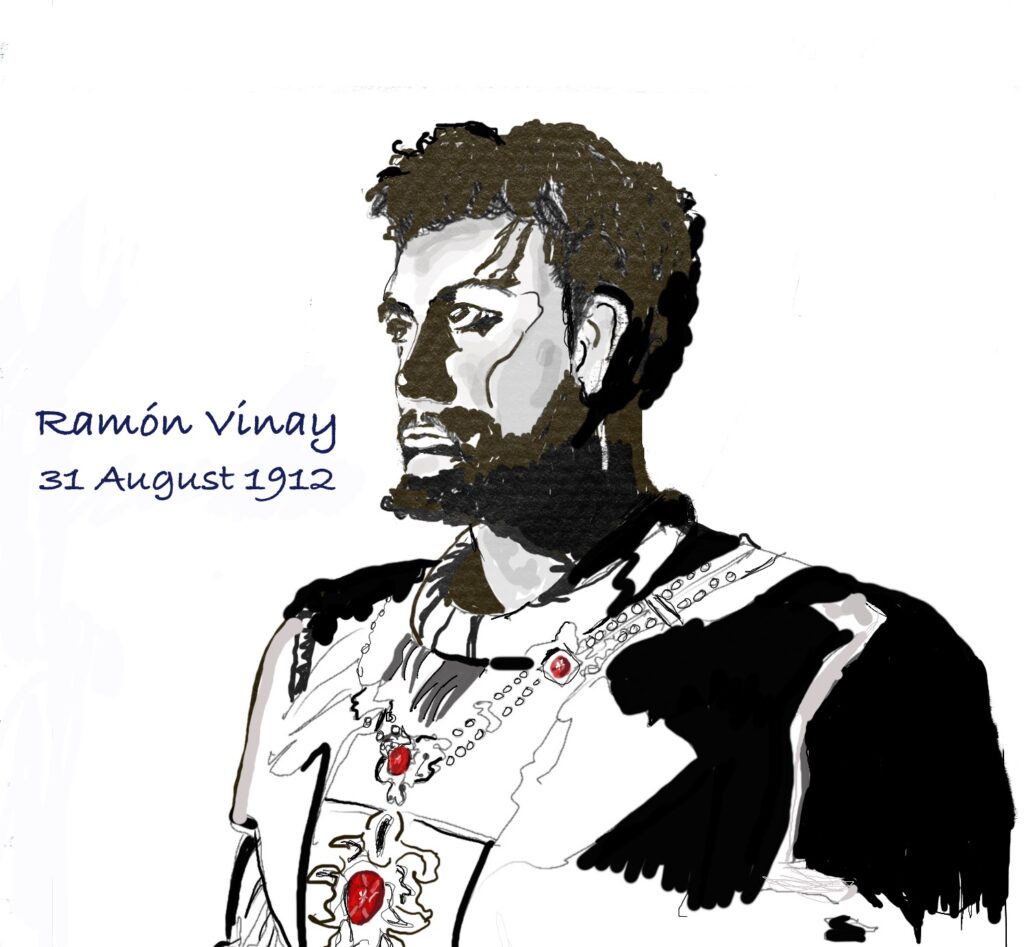
“The individual performance I remember best was that of Ramón Vinay as Otello; it was the two hundredth time he had sung the role, and never in my life have I heard it sung and acted so perfectly”. Rudolf Bing
So spoke Rudolf Bing, certainly a man who knew his singers and performers like no other in his decades as General Manager of New York’s Metropolitan Opera. The season was that of 1951-52. By all accounts Vinay was one of the most outstanding Otellos, not just of his own era, but of all time.
Otello is a dramatic tenor role, but Vinay was not always a tenor. In fact he started as a baritone singing in Mexico City where he studied singing and debuted in 1931 as Alphonse in La favorita. He sang the major Verdi baritone roles of Rigoletto, Count di Luna and Baron Scarpia until in 1943 when studying with René Maison he was re-invented as a tenor in the role of Don José, still in Mexico. It was the switch in voice though, that launched his international career and the recognition his greatness deserved. He debuted in New York City Opera in 1945 as Otello, and just one year later in 1946 he was engaged at the Metropolitan in the same role. He was to perform Otello hundreds of times and each time his interpretation was new, exciting and dictated not by routine, but a full and conscious identification with the role. A great leading lady with a huge voice too, Astrid Varnay, recalled, ’every time he sang it [Otello], he was constantly adding, subtracting, refining, and responding in character to whatever stage situations might arise. This explained what many people would go back to hear him sing the role over and over, because there would always be added some profundity to his characterization. In the final act, after I had been well and truly suffocated by the hero, I happened to land in death heavily on one arm. As I had already shuffled off this mortal coil, to quote another Shakespearean source, I was in no position to retain my moribund verisimilitude and get comfortable at the same time. Somehow i managed to whisper to Vinay, “Ramón, my arm.” His response was pure genius. Ever so gently, he drew my arm away from the edge of the bed and made it part of his acting, clutching it to his own grieving breast, studying it in motionless recumbency, and using it, so to speak, as a surrogate for the rest of me. It was an incredibly touching moment, even for me.’
Vinay was not a one-role singer. As well as Don José and Rodolfo, he sang the great Verdi and Wagner heroes; Manrico, Tristan, Siegfried, Tannhäuser and Parsifal.
In 1962, Vinay returned to baritone roles. From 1969 to 1971 he was artistic director of the Santiago Opera in his native Chile. In all he sang baritone roles for 17 years and tenor ones 19 years. We know that he was a thoughtful singer, both in regards to interpretation, and as selfless colleague who would support other singers. His colleagues marvelled at his intensity when bringing roles to life. Pederzini said, ‘his intensity was galvanizing, and I enjoyed very much appearing with him as Dalila too.’
One final story brings us closer to the character of the man and performer. Rudolf Bing related the story of the three Tristans. Vinay had been the original casting and was sick, the second casting tenor too was sick and the third casting also was sick. A nervous Bing faced the auditorium and after reassuring the audience that Nilsson would be singing Isolde, spoke, ‘However we are less fortunate with our Tristan. The Metropolitan has three distinguished Tristans available, but all are sick. In order not to disappoint you, these gallant gentlemen, against their doctors’ orders, have agreed to do one act each.’ This was above and beyond the call of duty.
Ramon Vinay, great dramatic tenor, born on this day in 1912 in Chillán, Chile, died in Mexico City on 4 January1996.
 DE
DE  EN
EN