Richard Tauber , Tenor, 16 May 1891
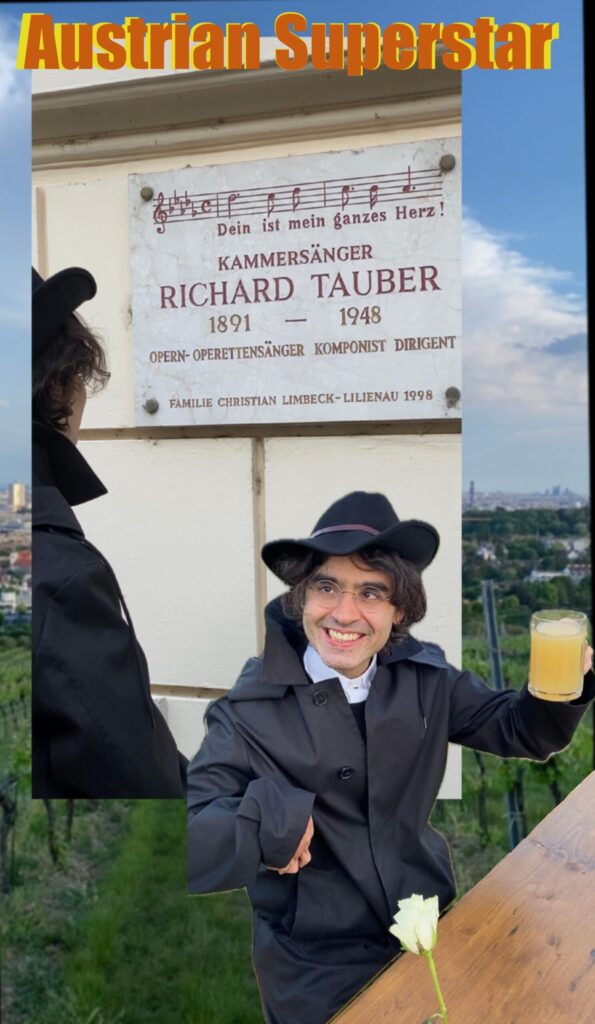
‘You are singing like a god. I believe you have the most beautiful voice in the world! The sound of it stimulates me to compose and write my music for you. You are always in my thoughts.’ So wrote the composer Franz Lehar to the tenor that was instrumental in the success of his opera productions.
Richard Tauber, born on 16 May 1891 in Linz, seems in retrospect born for a career on the stage. His destiny was to be a larger-than-life performer, but in what capacity? Conductor, composer or singer? In fact, Richard Tauber was all three in his career, but more of that later. It is his singing that we will start with, because as a stage child, brought up by his parents as they travelled performing throughout central Europe, the boy heard and saw daily the inner workings of the theatre and music performance. At age nine he played at being conductor. Although he had learnt violin and piano, in his teens he would sing Wagner and was convinced that this was his calling. His father however, had other ideas and sent him to Frankfurt to learn conducting. In an effort to convince young Richard to give up the idea of being a singer, in 1911, Tauber senior arranged for an audition to sing for the well-respected vocal teacher Carl Beines in Freiberg. In Beines own words, ‘’Richard Anton Tauber [Richard’s father] came to see me in 1911, and introduced his son, saying that he pretended to have a voice and insisted on becoming a singer. Would I test his voice in the hope of discouraging him from his false illusion? So, I tested him. He sang the love-song from The Walkure by Wagner, and I found his voice quiet; the height and depth were decidedly limited, but there was a timbre in his tenor which appealed to me. I particularly liked his musicality and his temperament. So I told his father that I felt it needed time to improve his ability, to teach him breathing and relaxation, to teach him not to push the sounds dead, and that he should never sing Wagner again, for it was not suited to his voice; and only then would I be able to decide whether he would become a singer or not.’
Beines believed Richard had the makings of a beautiful bel canto tenor. Richard was given instructions involving a strict daily vocal regime and a promise not to sing in public for at least eighteen months. Two years later, on the 2nd March 1913, Richard debuted in Chemnitz in the role of Tamino in Die Zauberflöte. Incidentally, his father by this time was Director of the Neustadttheater in Chemnitz! This was followed by a contract with the Dresden State Opera in which his legendary ability to learn roles within days was born.
There are so many instances to choose from about this amazing gift. The two most famous are his stepping in at three days’ notice to sing Calaf in the German premiere of Turandot in 1926. If you listen to his ‘Nessun dorma’ you will immediately recognise a great lyric tenor voice of sweetness and impeccable timing. The second is his taking on the role of Bacchus in Ariadne auf Naxos with two days’ notice and a cursory piano rehearsal one hour before the performance with none other than the composer and conductor for the evening, Richard Strauss. In Tauber’s own words, ‘After the performance Strauss thanked me for helping out at such short notice: ‘How lucky that you had already studied Bacchus!’ he said. “Where had you sung it before?’ ‘Nowhere,’ I answered, ‘Tonight was the first time.’ His mouth gaped wide open, his eyes flashed angrily, and he turned on me: ‘If I had known that, I would never have conducted the performance myself!’
However, as a token of gratitude, Strauss presented Richard Tauber with a cigar-holder once owned by Richard Wagner,…’
Tauber had the rare ability some singers have of making a failing opera or operetta into a success. When Franz Lehar’s Frasquita was looking likely to fail, Tauber stepped in and changed the fortunes of the operetta and Lehar’s subsequent career, in which the hit melodies seemed to be magically created. Their final collaboration was with Giuditta, following which Lehar never wrote again.
Richard was loved and respected by his colleagues too. The testimony of Jarmila Novotna is compelling; ’Richard Tauber, the tenor who partnered me later so often at the Vienna Staatsoper, and one of the formidable bel canto artists of his generation. He was always searching for perfection, and he often achieved it. … It was a real joy to work with him, for he rehearsed and repeated innumerable times until the effect was just right.’ Lotte Lehmann too went on record stating that early in her career in West Prussia, ‘It was comfortably earned money, especially in the company of such a pleasant partner in song as Richard Tauber, who was constantly surrounded by young female fans and himself was full of practical jokes.’
What is less well-known about Richard Tauber is that he had a disability which stemmed from a severe arthritis he experienced in 1929. He was less than thirty years old. He was not able to move his body, and was confined to bed for three months. This left him with a permanent limp as his left knee could not move freely. His wrists remained stiff as well.
Richard was one of the most prolific of recording artists in the 1930s, singing all types and genres of music. It is from these numerous recordings that many people far beyond the world of opera knew and loved his voice and revered him.
When political conditions deteriorated in Europe in the 1930s Tauber found a second home in Britain. It was in 1936 that he first appeared in a British film of Pagliacci. He would appear in several other films. He took up conducting again in 1941 when he toured the United Kingdom with the London Philharmonic Orchestra. He continued these conducting engagements with the LPO through the years up to and including1944. And how did he conduct? The witness of an orchestra member is, ‘And of course the orchestra adored him. The performances were absolutely fabulous. They regarded his interpretations of some of the big classics like Beethoven’s Pastoral Symphony, for instance, on the same level as the performances of, say, Beecham and Erich Kleiber, with whom they had worked. They had immense respect for him as a musician and a conductor.’ Tauber also conducted some of his own compositions during these tours.
Richard Tauber was by 1946, a very ill man. He had lung cancer, yet such was the force of his personality, he continued to work and record enthusiastically. He was singing with virtually one lung, yet this did not stop him. When he learned that his beloved Vienna State Opera was to come to London in 1947, he requested to be able to perform with them, which was readily agreed to. ‘On the last night of the season, (Saturday 27th September 1947), he appeared in Don Giovanni with Elisabeth Schwarzkopf, Paul Schoeffler, Erich Kunz and Hilde Guden. … he sang the the rôle (Don Ottavio) virtually on one lung, due to the cancer, and I can remember the perspiration flowing from his face. But he gave a great performance.’ ‘Apart from those close to him, no one knew they were witnessing the tragic farewell of one of the finest Mozart singers of his time.’ The next day he made two recordings for the BBC. He entered hospital a few days later, and one lung was removed. The other lung too was discovered to be infected. He passed away on the 8th January 1948.
After such an eventful life: – singer, conductor, composer, film actor, recording artist and ‘A-list’ celebrity, what are we left with? The magnificent lyric tenor voice that enchanted and enthralled; that created some of the finest operetta roles, and whose outgoing, generous and larger than life personality has left an indelible impression on lovers of music and singing.
The Baritone Way with Simone Balducci

he young Italian baritone Simone Balducci has been a student at the Luigi Cherubini Conservatorio in Florence since 2020 under the tutelage of Nemi Bertagni (voice) and Antonella Bellettini (musical preparation).
Simone belongs to a rare breed of baritones whose dark, resonant voices and personal stature are perfectly suited to the dramatic operas of Verdi and Puccini.
Simone’s talent was recognised when he was awarded outright winner of the Franco Mosca National Competition for Operatic Voices in Pisa in 2023.
Performances as Giorgio Germont in La Traviata, Rigoletto in Verdi’s opera, Baron Scarpia in Tosca and Puccini’s Messa di Gloria have brought him further acclaim.
The Voice Detective was very honoured to have discovered Simone Balducci at the beginning of his career which must surely lead to all the major opera houses of the world. In bocca al lupe Simone!
The Baritone Way with Simone Balducci
The young Italian baritone Simone Balducci has been a student at the Luigi Cherubini Conservatorio in Florence since 2020 under the tutelage of Nemi Bertagni (voice) and Antonella Bellettini (musical preparation).
Simone belongs to a rare breed of baritones whose dark, resonant voices and personal stature are perfectly suited to the dramatic operas of Verdi and Puccini.
Simone’s talent was recognised when he was awarded outright winner of the Franco Mosca National Competition for Operatic Voices in Pisa in 2023.
Performances as Giorgio Germont in La Traviata, Rigoletto in Verdi’s opera, Baron Scarpia in Tosca and Puccini’s Messa di Gloria have brought him further acclaim.
The Voice Detective was very honoured to have discovered Simone Balducci at the beginning of his career which must surely lead to all the major opera houses of the world. In bocca al lupe Simone!
The Baritone Way with Simone Balducci
The young Italian baritone Simone Balducci has been a student at the Luigi Cherubini Conservatorio in Florence since 2020 under the tutelage of Nemi Bertagni (voice) and Antonella Bellettini (musical preparation).
Simone belongs to a rare breed of baritones whose dark, resonant voices and personal stature are perfectly suited to the dramatic operas of Verdi and Puccini.
Simone’s talent was recognised when he was awarded outright winner of the Franco Mosca National Competition for Operatic Voices in Pisa in 2023.
Performances as Giorgio Germont in La Traviata, Rigoletto in Verdi’s opera, Baron Scarpia in Tosca and Puccini’s Messa di Gloria have brought him further acclaim.
The Voice Detective was very honoured to have discovered Simone Balducci at the beginning of his career which must surely lead to all the major opera houses of the world. In bocca al lupe Simone!
‘The Lucio Dalla I knew’ with Baldassarre Giardina
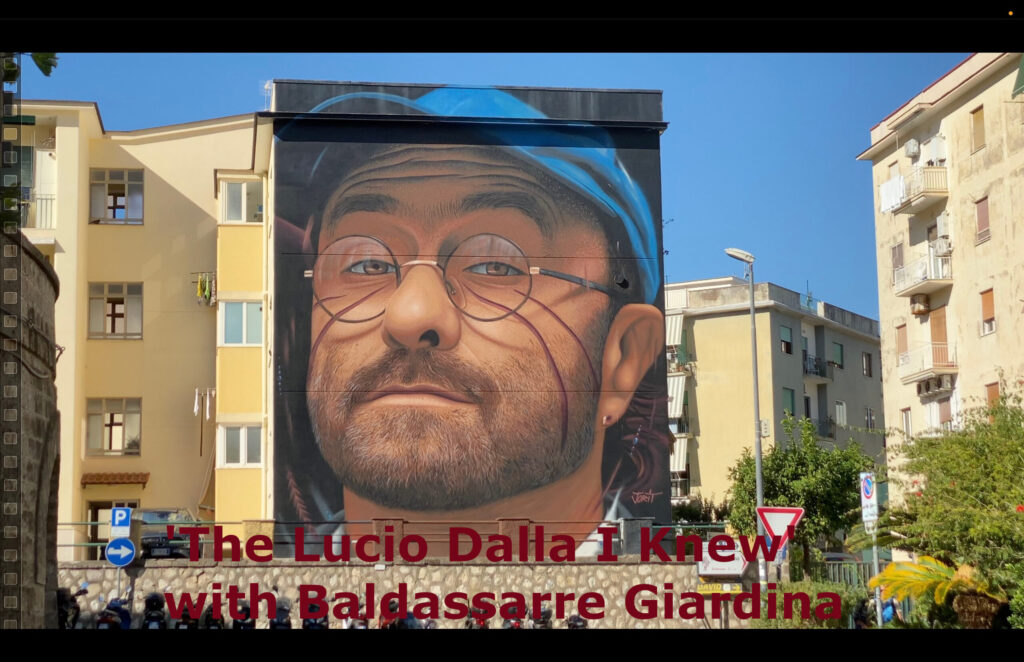
Baldassare Giardina is an archeologist and Lucio Dalla specialist.
It’s not very often that one gets to hear about a great musician’s life from the grass roots up as Baldassare’s first encounters with Dalla were listening to his father’s jazz band rehearse with the very young and unknown Lucio. Baldassare devotes his time now to imparting his extensive knowledge on Lucia Dalla to lucky visitors of Dalla’s 15th century extraordinary landmark house in Bologna.
‘The Lucio Dalla I knew’ with Baldassarre Giardina
Baldassare Giardina is an archeologist and Lucio Dalla specialist.
It’s not very often that one gets to hear about a great musician’s life from the grass roots up as Baldassare’s first encounters with Dalla were listening to his father’s jazz band rehearse with the very young and unknown Lucio. Baldassare devotes his time now to imparting his extensive knowledge on Lucia Dalla to lucky visitors of Dalla’s 15th century extraordinary landmark house in Bologna.
‘The Lucio Dalla I knew’ with Baldassarre Giardina
Baldassare Giardina is an archeologist and Lucio Dalla specialist.
It’s not very often that one gets to hear about a great musician’s life from the grass roots up as Baldassare’s first encounters with Dalla were listening to his father’s jazz band rehearse with the very young and unknown Lucio. Baldassare devotes his time now to imparting his extensive knowledge on Lucia Dalla to lucky visitors of Dalla’s 15th century extraordinary landmark house in Bologna.
Beniamino Gigli, 20. März 1890
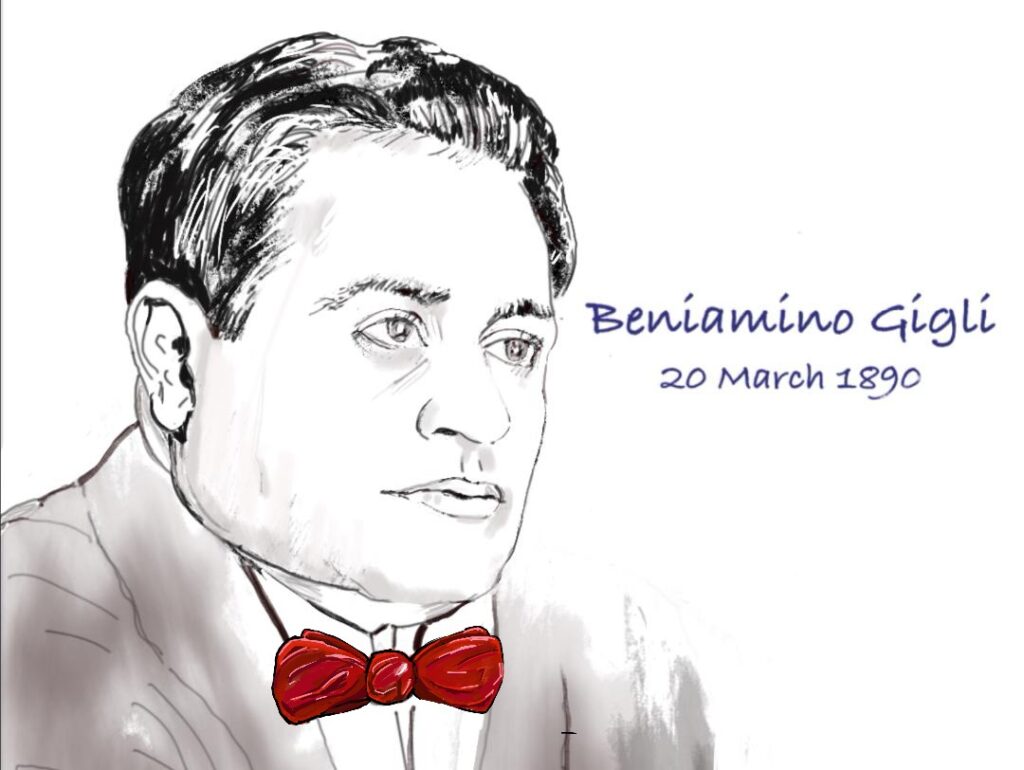
Beniamino Gigli, dessen Nachname ins Englische übersetzt „Lilien“ bedeutet, hat heute Geburtstag. Sicherlich war seine Lirico-Spinto-Stimme genauso perfekt, süß und schön wie sein Namensvetter.
Giglis Karriere erlangte im englischsprachigen Raum Superstar, als er von der Metropolitan Opera New York engagiert wurde und die wenig beneidenswerte Aufgabe hatte, nach dessen frühem und plötzlichem Tod in die Fußstapfen von Enrico Caruso zu treten. Vergleiche waren unvermeidlich; aber das war nicht der Fall
Es dauert lange, bis der honigsüße Gigli sein Publikum mit seiner flexiblen, lyrisch klingenden Stimme und der meisterhaften Umsetzung des Mezzosoprans überzeugt.
Beniamino Gigli, 20. März 1890
Beniamino Gigli, dessen Nachname ins Englische übersetzt „Lilien“ bedeutet, hat heute Geburtstag. Sicherlich war seine Lirico-Spinto-Stimme genauso perfekt, süß und schön wie sein Namensvetter.
Giglis Karriere erlangte im englischsprachigen Raum Superstar, als er von der Metropolitan Opera New York engagiert wurde und die wenig beneidenswerte Aufgabe hatte, nach dessen frühem und plötzlichem Tod in die Fußstapfen von Enrico Caruso zu treten. Vergleiche waren unvermeidlich; aber das war nicht der Fall
Es dauert lange, bis der honigsüße Gigli sein Publikum mit seiner flexiblen, lyrisch klingenden Stimme und der meisterhaften Umsetzung des Mezzosoprans überzeugt.
Lauritz Melchior, Tenor, March 20, 1890
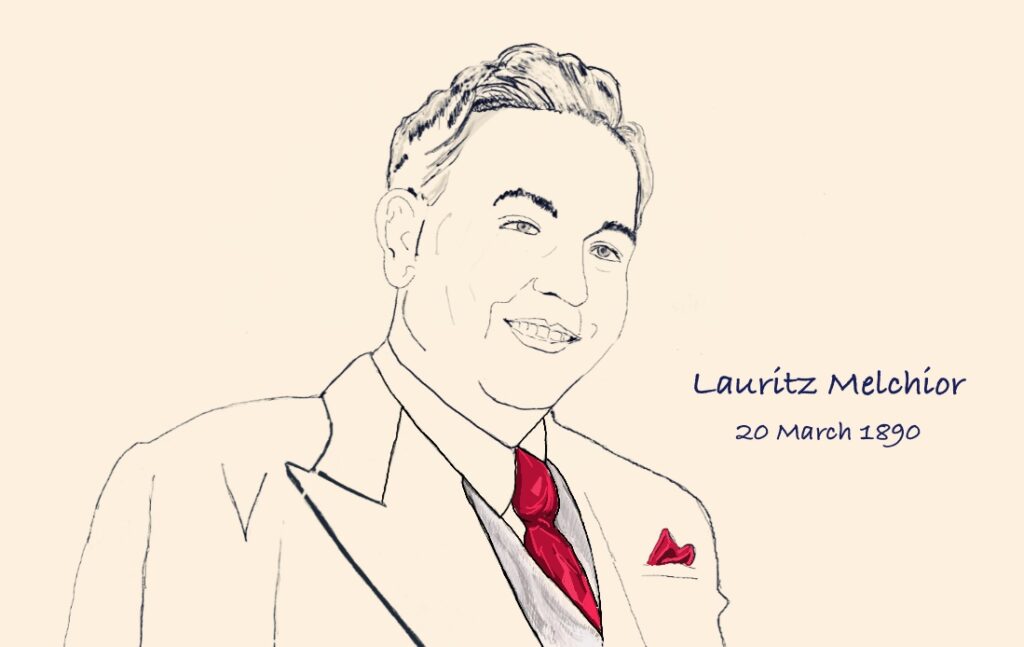
In Die Walküre Astrid Varnay wondered at the vocal prowess of Lauritz Melchior holding the ‘Wälse’ cries for a full twelve seconds. Varnay asked rhetorically, ‘…what tenor ever matched that? Maybe Melchior himself – he has been timed at eighteen!’
Such is the testimony of a great vocal colleague to a giant of a man and arguably the greatest of all Wagnerian tenors. But Lauritz Melchior was not always destined to be a tenor. He had started his professional career in his native Denmark at the Royal Opera in Copenhagen. Around 1916 Madame Charles Cahier, who had become by this stage a highly regarded vocal teacher, urged young Lauritz to consider switching to tenor. Madame Cahier heard something in the voice of the young baritone that indicated really a great tenor in the making. In 9 October 1918 he therefore commenced his career as a tenor with the role of Tannhäuser. Incidentally, Cahier herself had been a pupil of Jean de Reszke and in turn greatly influenced the career of Marian Anderson. We should also mention that the then well-known English novelist Hugh Walpole, supported Melchior throughout this period, arranging singing lessons with Victor Beigel in Vienna in 1922 with the purpose of ‘making him the greatest Wagner tenor in the world’, and opened the doors of society enabling him to sing before Queen Alexandra at Marlborough House. In 1924 he was engaged at Bayreuth in the Ring Cycle and proved an unforgettable Siegfried that members of the audience wept openly. Walpole had the satisfaction by 1925 of having his protege acclaimed ‘the greatest Heldentenor in the world.’
Allowing for this early adulation, Melchior remained a modest and generous colleague. Varnay later recalled her debut at New York’s Metropolitan Opera in 1942. She was the novice, thrown in at the deep end with the a who’s who list of Wagnerian greats, to sing Sieglinde, as Lotte Lehmann had a cold. Melchior’s presence, supportive attitude, and reassurance, ‘“Verlass dich auf mich”. What a beautiful thing to tell a newcomer. This great artist and gracious gentleman was telling the new kid on the block to leave things to him, and he would take care of me.’ The experience of another Wagnerian great, Kirsten Flagstad, tallies as in her memoirs she wrote, ‘I met Mr. Melchior for the first time while was rehearsing Siegfried. I had attended the rehearsal, and we were presented to one another by the manager. He was very helpful and encouraging, and as usual in excellent humour.’
Melchior’s career centred on all the demanding Heldentenor roles and his activity throughout the 1920s and 30s are a testament to his capacity, reliability and sheer artistry. He appeared in each role over 100 times and Tristan over 200 times. Such was Melchior’s fame, he appeared in five Hollywood musicals from 1945 to 1953 which has somewhat impacted his reputation among purists. But listen to his recordings and be blown away by the power and beauty. Add to this the fact that throughout his heyday no Wagner opera at a major house could do without Melchior, and you have a rare testament to a unique talent and artist.
However, as fashions change with time, in 1950 the new director of the Metropolitan Opera, Rudolf Bing moved the repertoire away from Wagner. Lauritz Melchior, who had done so much was not included in the change of direction and he could not come to terms with the new manager. To add insult to injury, the greatest Wagnerian tenor of the age was later accused by Bing of being ‘a sloppy performer with a casual attitude toward rehearsals and a penchant for practical jokes…’ Setting the record straight, Astrid Varnay wrote, “I never once witnessed the kind of conduct that Bing and Mayer claimed was so deplorable. On the contrary, no soprano could have asked for a more professional and caring tenor by her side on the stage.’ To underscore his concern for young singers and professionalism, he set up the Lauritz Melchior Heldentenor Foundation to provide scholarships for gifted singers.
Born on the 20 March 1890 in Copenhagen, Lauritz Melchior passed away on the 18 March 1973 in Santa Monica, California. There are many recording of his singing, including some from 1913 prior to his switch from baritone to tenor. His final performance was with the Danish Radio Orchestra in 1960 in celebration of his 70th birthday.
 DE
DE  EN
EN