SHORT008 WHY VISIT SORRENTO, ITALY?
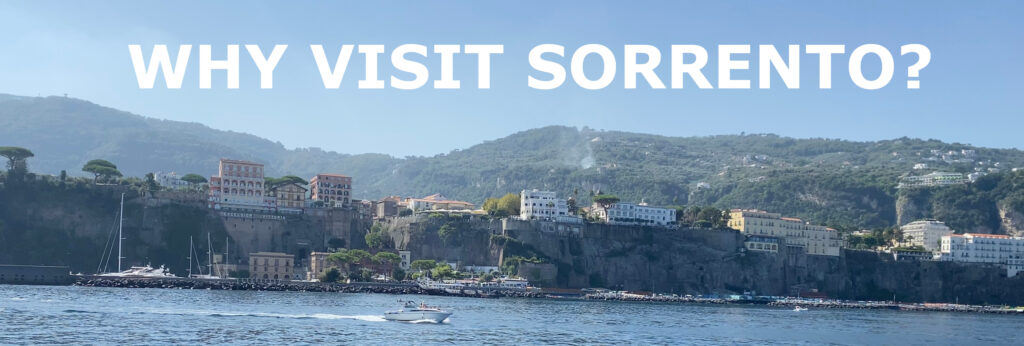
Why visit Sorrento? Because it’s on the Amalfi Coast?; For the lemon and orange groves?; Because it is immortalised in the Neapolitan Song ‘Torna a Surriento’ or ‘Come Back to Sorrento?’ But there is one more important reason to visit Sorrento. Watch the snapshot short to find out…
Episode 10 Of The Voice Detective Show with Mariano Rubinacci
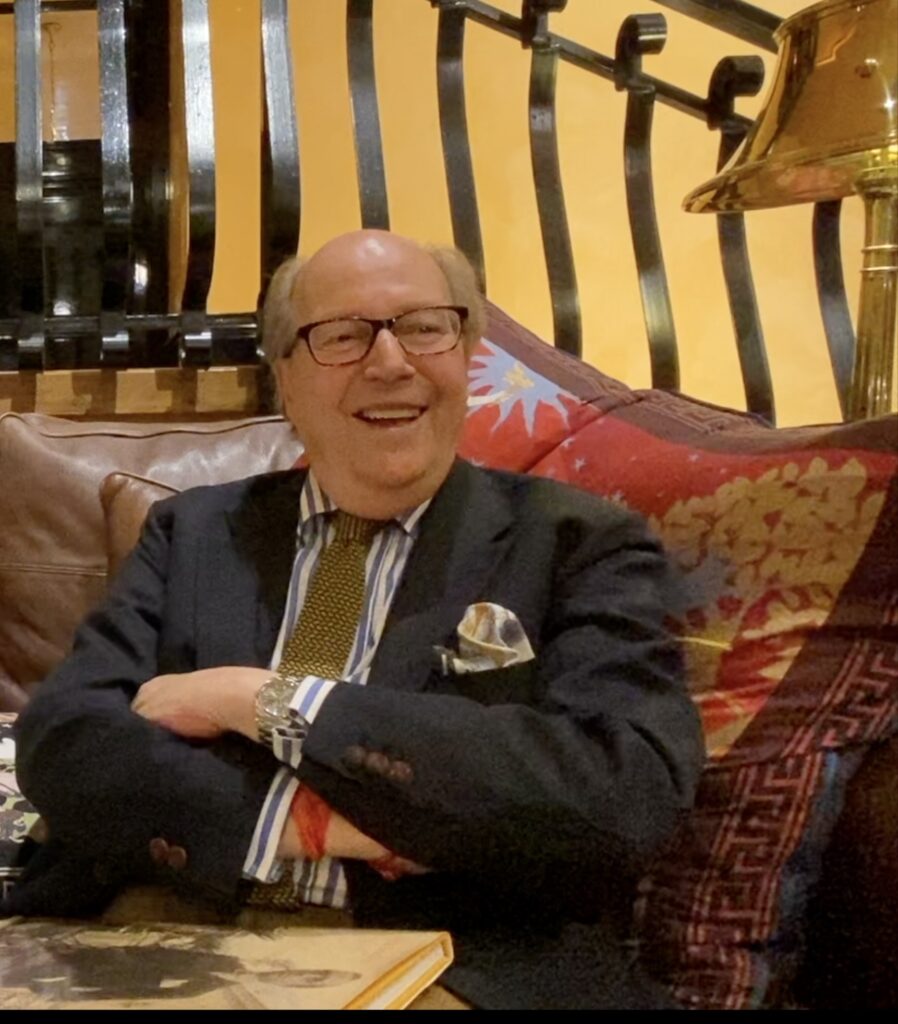
In the world of high-class bespoke tailoring, Mariano Rubinacci combines a long family tradition of elegant, comfortable tailoring with the indisputable eye of an artist. He just doesn’t produce artisan clothing, but adds another dimension to the world of intelligent, aesthetic and well-considered fashion.
Mariano took over the family tailoring firm at the very young age of 18 in 1961 after his father died. He learned one might say, by doing. His eye for a good profile, the way clothing should enhance the ‘bella figura’ of a client, and the informed advice he provided, continued the fine tradition embodied in the Rubinacci name. His father, who had started the firm in 1930, had been sartorial arbiter to Neapolitan society, and decided to start producing clothing for his friends and acquaintances, importing the finest wools and silks. Mariano and now his son Luca, continue this tradition. His other children too are involved intimately with the house of Rubinacci.
Just like his father before him, Mariano has tailored the most beautiful clothing for a virtual who’s who of the world of the arts, culture and politics.
Mariano is a proud Neapolitan. He feels in his being a Neapolitan wherever he is. The Neapolitan tradition of fine tailoring and style is what he seeks to bring to the wider world. To quote Mariano himself, ‘Leaving Naples to stay in Naples. Selling Naples throughout the world. This is one of my greatest aspirations. To make others understand our aesthetic sense.’
Today, the house of Rubinacci is found in Naples, Milan and London.
Episode 10 Of The Voice Detective Show with Mariano Rubinacci
In the world of high-class bespoke tailoring, Mariano Rubinacci combines a long family tradition of elegant, comfortable tailoring with the indisputable eye of an artist. He just doesn’t produce artisan clothing, but adds another dimension to the world of intelligent, aesthetic and well-considered fashion.
Mariano took over the family tailoring firm at the very young age of 18 in 1961 after his father died. He learned one might say, by doing. His eye for a good profile, the way clothing should enhance the ‘bella figura’ of a client, and the informed advice he provided, continued the fine tradition embodied in the Rubinacci name. His father, who had started the firm in 1930, had been sartorial arbiter to Neapolitan society, and decided to start producing clothing for his friends and acquaintances, importing the finest wools and silks. Mariano and now his son Luca, continue this tradition. His other children too are involved intimately with the house of Rubinacci.
Just like his father before him, Mariano has tailored the most beautiful clothing for a virtual who’s who of the world of the arts, culture and politics.
Mariano is a proud Neapolitan. He feels in his being a Neapolitan wherever he is. The Neapolitan tradition of fine tailoring and style is what he seeks to bring to the wider world. To quote Mariano himself, ‘Leaving Naples to stay in Naples. Selling Naples throughout the world. This is one of my greatest aspirations. To make others understand our aesthetic sense.’
Today, the house of Rubinacci is found in Naples, Milan and London.
HN006 SARTORIAL MOZART – NAPLES AND BEYOND

It is well known that Mozart took an interest in his appearance, his hair and his clothes. This started at an early age, encouraged by his father Leopold, who like his son, was aware that to make it ‘in the world’, one had to not just have the talent and product of that talent, but also look the part as well.
In 1770 when Amadeus and Leopold were touring Italy, (Amadeus being just a few months into his fifteenth year), Leopold wrote his wife on the 19th May, ‘We left our fine cloth suits in Rome and have had to wear our beautifully braided summer suits. Wolfg.’s is made of pink moiré, but the colour is so unusual that in Italy it’s called colore di fuoco, or flame-coloured: with silver lace and lined with a light sky-blue material. My suit is a kind of cinnamon colour, piquéd Florentine cloth, with silver lace and lined in apple green. Both suits are very beautiful, …’
In Italy, home of fashion, the sartorial purchases didn’t end at Naples that year. By the 22nd December Leopold wrote again, ‘Can you imagine Wolfg. in a scarlet suit with gold braid and sky-blue satin lining? The tailor is starting work on it today. He’ll be wearing this suit on the first 3 days, when he sits at the keyboard. The one that was made for him in Salzburg. is too short by a standing hand, and certainly too tight and small.’ Ask yourself; were the clothes from the following year already too small for Amadeus or was the delight of wearing a scarlet suit with gold braid too irresistible?
This of course wasn’t the only occasion that a red suit caught the Maestro’s eye. Much later when no longer with his father who remained in Salzburg, Amadeus wrote, ‘As for the beautiful red coat that tickles my fancy so dreadfully, I’d be grateful if you could let me know where I can get it and how much it costs, as I’ve forgotten – I was so taken with its beauty that I didn’t notice the price. – I really have to have a coat like that, as it’s worth it just for the buttons that I’ve been hankering after for some time;..’ He went on in the same letter of 28 September 1782 (now 26 years of age) to complain, “I’d like to have everything that is good and beautiful! – But why is it that those who are not in a position to do so want to spend all their money on such things, whereas those who are in a position to do so do not do so?’ But before we judge him, or accuse him of envy, remember this was the era before the French Revolution. It was an age of enlightenment, fashion and wit. Clothes made the man.
And now to his hair! In September 1777 Amadeus was in Munich. Count Seeau was the Director of Opera at the Electoral Court. Mozart wrote his father, ‘We were already up again at 7 on the 25th, but my hair was in such a mess that it wasn’t until 1/2 past 10 that I arrived at Count Seeau’s…’ Three and half hours after starting his hair it was done! Talk about a bad-hair day.
Marriage and domesticity may have changed Mozart’s sartorial ambition, but ‘After the Honeymoon the Laundry’, and we find him writing his wife Constanze on the 8th October 1791, ’N.B.: You presumably sent the 2 pairs of yellow winter breeches that go with the boots to the laundry as Joseph and I have looked for them in vain.’ This was just two months before his untimely death.
HN006 SARTORIAL MOZART – NAPLES AND BEYOND
It is well known that Mozart took an interest in his appearance, his hair and his clothes. This started at an early age, encouraged by his father Leopold, who like his son, was aware that to make it ‘in the world’, one had to not just have the talent and product of that talent, but also look the part as well.
In 1770 when Amadeus and Leopold were touring Italy, (Amadeus being just a few months into his fifteenth year), Leopold wrote his wife on the 19th May, ‘We left our fine cloth suits in Rome and have had to wear our beautifully braided summer suits. Wolfg.’s is made of pink moiré, but the colour is so unusual that in Italy it’s called colore di fuoco, or flame-coloured: with silver lace and lined with a light sky-blue material. My suit is a kind of cinnamon colour, piquéd Florentine cloth, with silver lace and lined in apple green. Both suits are very beautiful, …’
In Italy, home of fashion, the sartorial purchases didn’t end at Naples that year. By the 22nd December Leopold wrote again, ‘Can you imagine Wolfg. in a scarlet suit with gold braid and sky-blue satin lining? The tailor is starting work on it today. He’ll be wearing this suit on the first 3 days, when he sits at the keyboard. The one that was made for him in Salzburg. is too short by a standing hand, and certainly too tight and small.’ Ask yourself; were the clothes from the following year already too small for Amadeus or was the delight of wearing a scarlet suit with gold braid too irresistible?
This of course wasn’t the only occasion that a red suit caught the Maestro’s eye. Much later when no longer with his father who remained in Salzburg, Amadeus wrote, ‘As for the beautiful red coat that tickles my fancy so dreadfully, I’d be grateful if you could let me know where I can get it and how much it costs, as I’ve forgotten – I was so taken with its beauty that I didn’t notice the price. – I really have to have a coat like that, as it’s worth it just for the buttons that I’ve been hankering after for some time;..’ He went on in the same letter of 28 September 1782 (now 26 years of age) to complain, “I’d like to have everything that is good and beautiful! – But why is it that those who are not in a position to do so want to spend all their money on such things, whereas those who are in a position to do so do not do so?’ But before we judge him, or accuse him of envy, remember this was the era before the French Revolution. It was an age of enlightenment, fashion and wit. Clothes made the man.
And now to his hair! In September 1777 Amadeus was in Munich. Count Seeau was the Director of Opera at the Electoral Court. Mozart wrote his father, ‘We were already up again at 7 on the 25th, but my hair was in such a mess that it wasn’t until 1/2 past 10 that I arrived at Count Seeau’s…’ Three and half hours after starting his hair it was done! Talk about a bad-hair day.
Marriage and domesticity may have changed Mozart’s sartorial ambition, but ‘After the Honeymoon the Laundry’, and we find him writing his wife Constanze on the 8th October 1791, ’N.B.: You presumably sent the 2 pairs of yellow winter breeches that go with the boots to the laundry as Joseph and I have looked for them in vain.’ This was just two months before his untimely death.
GINA CIGNA, SOPRANO, MARCH 06, 1900
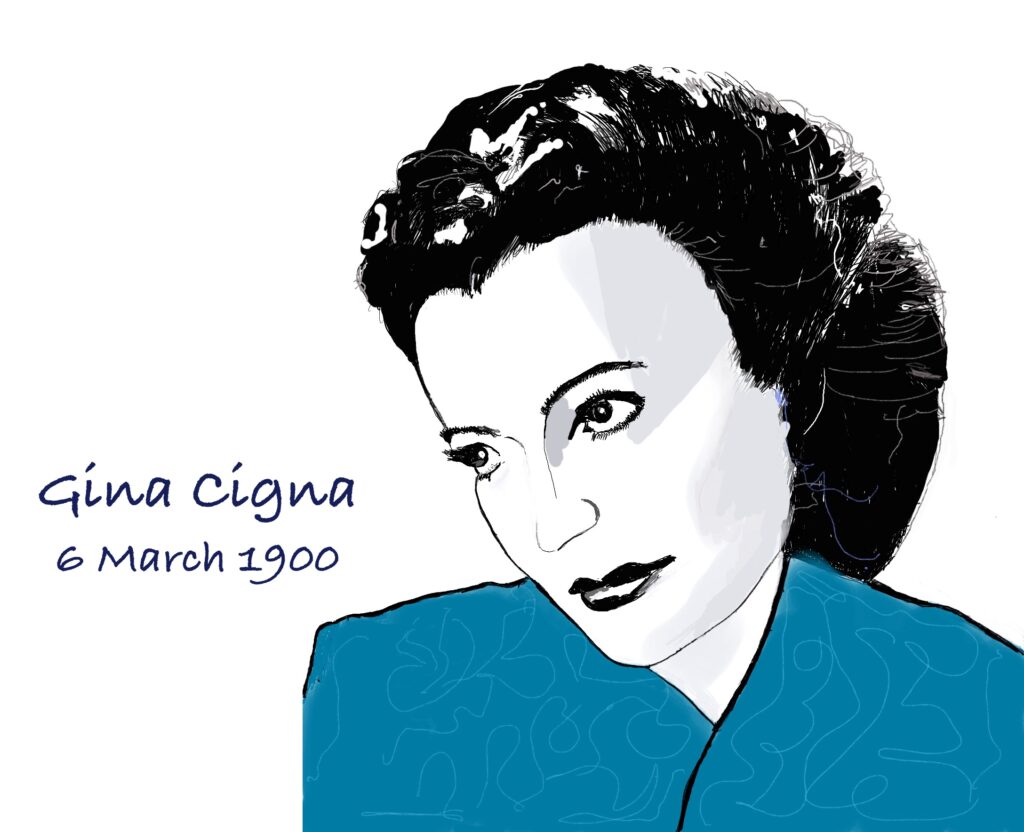
‘I always preferred temperament and interpretation to voice alone.’
A child of the nascent twentieth century, Gina Cigna was born on the 6 March 1900 in Angers to parents of Italian descent. Amazingly she saw the entire century out, dying on the 26 June 2001 in Milan. With such a well-timed entrance and exit, she was doubtless destined for the stage and as a great dramatic interpreter!
Cigna was one of the most prominent Turandots of the 1930s. She was in fact the first artist to record the role of Turandot. It is claimed that she performed Turandot a total of 493 times – truly a remarkable stamina and vocal power was required for this feat. She was also one of the yardsticks by which all subsequent Normas have been measured. Another notable role was Aida, in which her Ritorna vincitor was described as a ‘searing experience’. Further superlatives were lavished upon her performance of Aida at New York’s Metropolitan Opera, a ‘beautiful, clear, pure voice,…a marvellous musician…beautiful vocal control…’ And yet there were critics as well that noted,’The voice is full and has a great range, but the emission is uneven and the agility is heavy.’ What we can be sure of, is that Cigna gave her all to performing the role and her statement in favour of interpretation over vocal perfection is testament to this. How exciting her stage presence must have been.
Initially she studied piano at the Paris Conservatoire but was heard singing by none other than the great Emma Calvé who arranged an audition with Toscanini. Remarkably, Cigna accompanied herself on the piano, playing and singing arias from Rossini and Verdi which resulted in an immediate engagement! Gina Cigna’s professional stage debut was at La Scala as Freia in Wagner’s Das Rheingold in January 1927.
Throughout the 1930s Cigna performed in Latin America, North America and Europe the many roles which she had made her own.
Tragically her career was cut short by a serious car crash in 1947 en-route to perform Tosca in Verona. She completed her performance and collapsed afterwards – she had suffered a heart attack. Cigna never sang again but began an illustrious career as a singing teacher.
GINA CIGNA, SOPRANO, MARCH 06, 1900
‘I always preferred temperament and interpretation to voice alone.’
A child of the nascent twentieth century, Gina Cigna was born on the 6 March 1900 in Angers to parents of Italian descent. Amazingly she saw the entire century out, dying on the 26 June 2001 in Milan. With such a well-timed entrance and exit, she was doubtless destined for the stage and as a great dramatic interpreter!
Cigna was one of the most prominent Turandots of the 1930s. She was in fact the first artist to record the role of Turandot. It is claimed that she performed Turandot a total of 493 times – truly a remarkable stamina and vocal power was required for this feat. She was also one of the yardsticks by which all subsequent Normas have been measured. Another notable role was Aida, in which her Ritorna vincitor was described as a ‘searing experience’. Further superlatives were lavished upon her performance of Aida at New York’s Metropolitan Opera, a ‘beautiful, clear, pure voice,…a marvellous musician…beautiful vocal control…’ And yet there were critics as well that noted,’The voice is full and has a great range, but the emission is uneven and the agility is heavy.’ What we can be sure of, is that Cigna gave her all to performing the role and her statement in favour of interpretation over vocal perfection is testament to this. How exciting her stage presence must have been.
Initially she studied piano at the Paris Conservatoire but was heard singing by none other than the great Emma Calvé who arranged an audition with Toscanini. Remarkably, Cigna accompanied herself on the piano, playing and singing arias from Rossini and Verdi which resulted in an immediate engagement! Gina Cigna’s professional stage debut was at La Scala as Freia in Wagner’s Das Rheingold in January 1927.
Throughout the 1930s Cigna performed in Latin America, North America and Europe the many roles which she had made her own.
Tragically her career was cut short by a serious car crash in 1947 en-route to perform Tosca in Verona. She completed her performance and collapsed afterwards – she had suffered a heart attack. Cigna never sang again but began an illustrious career as a singing teacher.
Episode 9 Of The Voice Detective Show with Melissa Tran, Chartered Physiotherapist, UK

Melissa is a musculoskeletal and orthopaedic physiotherapist, qualified from Brunel University with almost 10 years of experience. She specialises in chronic pain following 20 years of practicing sports & remedial massages, with emphasis on injury management and rehabilitation.
Apart from providing treatments, Melissa has been a personal trainer and strength & conditioning coach with almost two decades of experience, knowledge and skill to help clients with general fitness goals and wellness coaching, to sports specific training including nutritional guidance. She has worked with people from all different backgrounds; children, the elderly to professional athletes including Charlton Football Club. Most recently, she worked as physiotherapist to Michael McKinson, who is currently ranked UK No.1 WBO Welterweight boxer.
Throughout the years of working in the health & fitness industry, she has acquired vast experience as a health consultant. Patients have often described Melissa as a magician when it comes to treating pain and fixing associated problems. Many have even extended their confidence and compliment to her service by quoting, “If Melissa can’t fix you – nobody can!”
She is registered with The Chartered Society of Physiotherapy (CSP) and The Health Care Professional Council ( HCPC). Melissa is also a qualified acupuncturist following a course completed with Hertfordshire University.
Episode 9 Of The Voice Detective Show with Melissa Tran, Chartered Physiotherapist, UK
Melissa is a musculoskeletal and orthopaedic physiotherapist, qualified from Brunel University with almost 10 years of experience. She specialises in chronic pain following 20 years of practicing sports & remedial massages, with emphasis on injury management and rehabilitation.
Apart from providing treatments, Melissa has been a personal trainer and strength & conditioning coach with almost two decades of experience, knowledge and skill to help clients with general fitness goals and wellness coaching, to sports specific training including nutritional guidance. She has worked with people from all different backgrounds; children, the elderly to professional athletes including Charlton Football Club. Most recently, she worked as physiotherapist to Michael McKinson, who is currently ranked UK No.1 WBO Welterweight boxer.
Throughout the years of working in the health & fitness industry, she has acquired vast experience as a health consultant. Patients have often described Melissa as a magician when it comes to treating pain and fixing associated problems. Many have even extended their confidence and compliment to her service by quoting, “If Melissa can’t fix you – nobody can!”
She is registered with The Chartered Society of Physiotherapy (CSP) and The Health Care Professional Council ( HCPC). Melissa is also a qualified acupuncturist following a course completed with Hertfordshire University.
ADELINA PATTI, SOPRANO, FEBRUARY 19, 1843
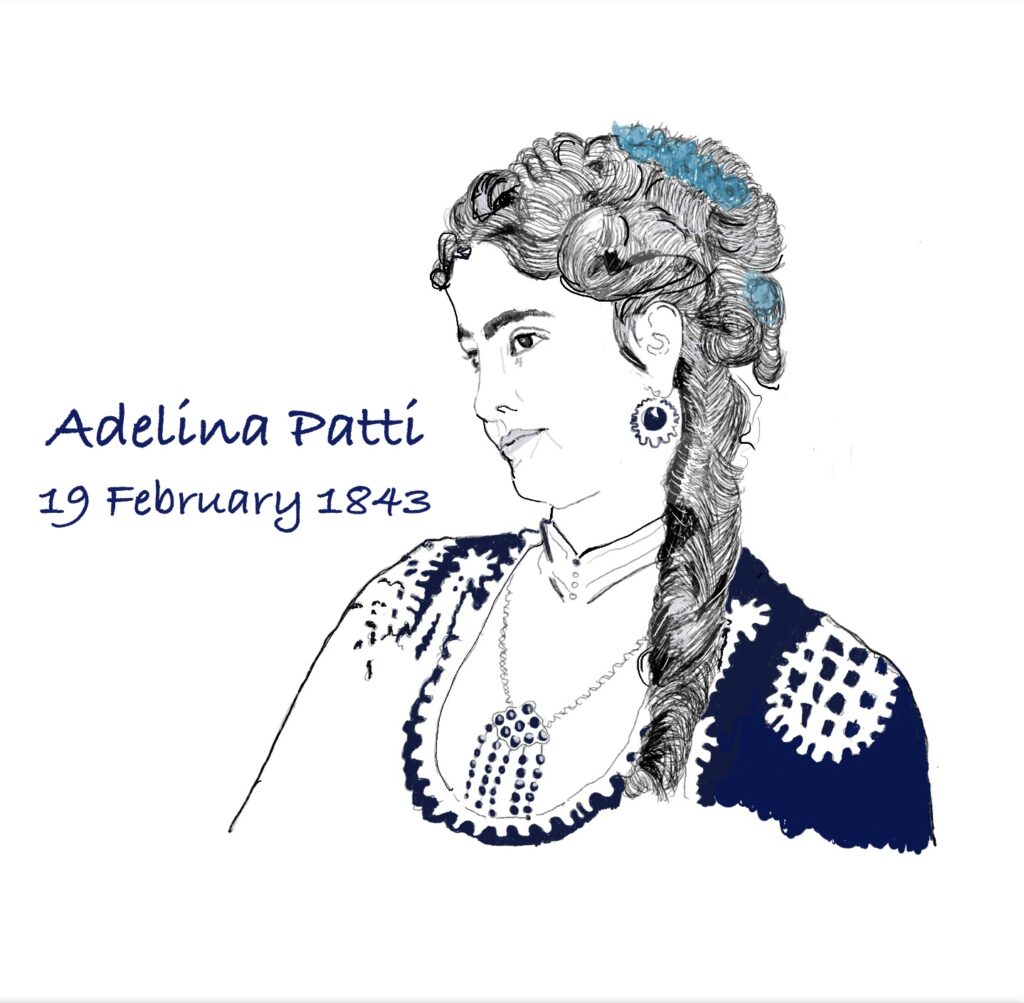
On the February. 19, 1843, Adelina Patti was born in Madrid, the daughter of Sicilian parents, who were both professional singers, her father a tenor and her mother a soprano. With such a start no wonder the great composer Giuseppe Verdi was able to say of her, ‘She is perfectly organised. Perfect balance between singer and actress, a born artist in every sense of the word.’ Verdi when asked which three sopranos were his favourites, famously replied, ‘First, Adelina; second, Adelina; third, Adelina.’ Yet George Bernard Shaw when writing about Patti in 1888, noted that she would, ‘bow to you in the agony of stage death if you only dropped your stick accidentally.’
According to John Roselli, Patti was in real terms the highest paid opera singer in history. Patti commanded 10,000 francs per performance when average colleagues would make anything between 500 to 1,000 francs per month! She was gifted not only with a pure voice, doll-like looks and acting but, ‘a notable competence in running her career and a will of iron.’ In her heyday she was better paid than such notable thespian contemporaries, Sarah Bernhardt and Henry Irving, not to mention her operatic colleagues. What did she do with this fortune you may ask? Patti was able buy a Welsh castle, Craig-y-Nos, with her second husband and in her 150 seat private theatre perform for invited guests. This was inaugurated on 12 August 1891 with the first act of la Traviata and the third act of Faust. Patti’s husband sang the role of Mephistopheles in the latter. You can still see both the castle and theatre as its now a hotel. What is sadly also true is that although, ‘the best singers still earn well,.. the greater economic and social equality of our time is incompatible with fees at Patti level.’ But despite being lady of the manor in Craig-y-Nos, we must also remember that Adelina Patti sang an annual charity concert in Swansea
Yet it would be churlish to view Adelina Patti from the perspective of her success. In New York the conductor Giulio Arditi, in his memoirs noted the young girl, ‘first selected a comfortable seat for her doll in such proximity that she was able to see her while singing,’ and when young Adelina sang, I wept genuine tears of emotion, tears which were the outcome of the original and never-to-be-forgotten impression her voice made when it first stirred our innermost feelings…’ Whatever Patti possessed vocally, it was something any lover of classical singing must surely regret not having been able to hear. At her London debut in la Sonnambula in 1861 one critic wrote, ‘Mdlle. Patti is a triumphant refutation of the assumption that art and genius have deserted the operatic stage,’
Her career was guided from the start. Her first teacher, her brother-in-law, Maurice Strakosch, decided she must stop singing at age ten to allow her voice to develop. She did make her debut at age sixteen in the title role of Lucia di Lammermoor!
A curious incident in San Francisco in 1884 is that the greatest operatic performer of her age survived an attempt to murder her with a bomb thrown from the gallery. The terrorist threw wildly though and the bomb exploded in a box. Consummate artist that she was, her courage never failed her. She never lost her nerve in a crisis and in New Orleans, as the overcrowded gallery was starting to sink, she calmed the audience by singing’ Home, Sweet, Home’ without accompaniment allowing a safe evacuation to take place! A similar event took place in Budapest where someone had screamed out, Fire!’ and Patti calmed the audience.
Perhaps we should finish with the judgement of Eduard Hanslick, arguably the greatest music critic of the nineteenth century, ‘he had heard more brilliant voices, seen more sophisticated actresses, and more beautiful women, but Patti’s appeal consisted in making him forget them.’
 EN
EN  DE
DE